Welcome! Glad you are here!

"For I know the thoughts that I think toward you, says the LORD, thoughts of peace and not of evil,
to give you a future and a hope." Jeremiah 29:11 (NKJV)

Sharing resources, research, ideas, inspiring scripture, success stories and even failures...

Sunday, November 30, 2014

Autism and the Holidays! (cue the chorus of groans!)

"It's the Most Wonderful Time of the year!!!"... or so the song goes. But not so much for too  many of our families and loved ones with ASD. This next month I will post several different resources to help us all prepare (and survive) the Holiday season and make it as enjoyable for our loved ones with ASD. Here is a wonderful article I found on the website for Bradley Hospital in Rhode Island. Not too wordy, just right for us on the run! Bookmark the site so you can read it at work or while your kids are sleeping: http://www.bradleyhospital.org/parenting-resources/autism-and-the-holidays.html
Be well and be blessed!
DC

  • Autism and the Holidays: Sensory Overload

  • The hustle and bustle of the holidays can be especially stressful for children who have autism.

    From last-minute shopping trips to holiday parties and family gatherings, the holiday season is often a stressful time for parents.  But for children with autism spectrum disorder who rely on structure and routine, the hustle and bustle of the holidays can be extremely unsettling, according to experts from Bradley Hospital.
    This is particularly true for children who also have sensory processing issues and may be overwhelmed by the overabundance of lights, sights, sounds and smells during the holidays. This distress can often impact the entire family.
    Maintaining the current structure and routine for your child may not always be possible during the holidays, but there are ways to help reduce your child's anxiety while increasing your family's enjoyment of the holiday season, say experts from the Center for Autism and Developmental Disabilities at Bradley Hospital.

    The key to preparing for the inevitable changes that come with the holidays is to provide your child with early cues of what will be taking place. For some, this might require depicting with words or pictures exactly what will and will not occur at each event.
    The following tips can make the holidays more fun for everyone involved:
    • Visiting If you will be visiting relatives or friends, let the child know in advance where you are going, who will be there when you arrive, what you will do when you are there and the time you plan to arrive and leave. Follow the same protocol if relatives or friends will be visiting your home. Parents may also want to ensure that a quiet area has been identified where the child with autism can go and relax if the activities become too overwhelming.
       
    • Holiday shopping Holiday shopping with a child who has autism spectrum disorder may present its own set of challenges, especially when the stores are crowded and noisy. Make a list that identifies the items you're shopping for and do not roam the stores trying to decide what to buy. Keeping the trip short and being organized will help minimize the potential for the child to become overwhelmed and have a "meltdown" in the middle of a store.
       
    • Decorations Holiday decorations inside the house--including bright and blinking lights, wreaths, trees, candles and stacks of presents --could be areas of concern.  Parents know best what their child with autism enjoys and at what point things may become overwhelming. However, parents should not expect that their child has a higher tolerance simply because it's the holiday season.
       
    • Preparing siblings Since the holidays are a time for the whole family to enjoy, it's important to make siblings aware of how stressful this season can be for their brother or sister with autism. Before the holiday season begins, take the time to remind children of their sibling's sensory issues, communication difficulties, low frustration tolerance and likes and dislikes. Parents can then share the family's strategy for avoiding potential issues and discuss what they will do if their best efforts are unsuccessful.

    We often put pressure on ourselves to make the holidays perfect, which is unrealistic. In the end, the most important thing to remember is that the holidays are a time to cherish one another and the joy of being together. Whether it's scaling back or starting new traditions, celebrate in a way that makes the most sense for your family and is something that you, your child and the entire family will all enjoy.
    For more information about Bradley Hospital's Center for Autism and Developmental Disabilities, please visit: http://www.lifespan.org/bradley/services/ddp/default.htm

Saturday, November 1, 2014

Superflex and the Unthinkables!

It's no secret that my little guy is terrified of Halloween. He is terrified of costumes and strangers; put the two together and it's sheer panic! Coincidentally, this week at school he was introduced to a superhero character named Superflex. He is part of the Social Thinking curriculum and has been a godsend for my little man! You see, my little guy has been having a very hard time at school (surprise!). But the thing that's been so hard is not school itself, it's feeling so remorseful and responsible when things don't go well. He's somehow internalized that this is all his fault (sound familiar?)... enter Superflex and his team of Unthinkables! Superflex is the hero inside your brain who defeats the Unthinkable villains who are making your brain do things that aren't helpful, like getting stuck, being rigid, etc. I'm not doing this justice, so here's where you can learn more: https://www.socialthinking.com/books-products/products-by-age-range/grades-3-5/superflex-a-superhero-social-thinking-curriculum-package-detail

Here's what is so fantastic: my little guy's private speech therapist knows all about Superflex. We had OT and speech on Halloween and were ready to have to cancel because of the costumes, etc. Well, his speech therapist came up with the idea to dress up as Superflex at the clinic and try to conquer his fear! HOW AWESOME WAS THAT?!?!?! It worked! He went and even put on the cape! So...I had to introduce all my readers to this awesome character and give you guys a great little visual handout I found on Pinterest. As always, I will cite my sources. This is Superflex right from the Social Thinking website (link listed above):
And here is the awesome visual to help kids think flexibly:
for the original, go to: http://lunchbuddiesplus.wordpress.com/?s=flexible+thinking&submit=Go

I also found a great resource where all the Superflex Unthinkable characters are listed with illustrations in color and written descriptions. I hope you all enjoy these: srsp.weebly.com/uploads/7/2/4/4/7244139/appendix_b_-_cards.pdf

And, as always, feel free to follow my Autism page on Pinterest, where you can find great resources and links: http://www.pinterest.com/dlcot/autism/

Have a blessed weekend and be well!
DC

Monday, October 13, 2014

Triggers of Behavior in Children with Autism

Hello all! Here's another great visual that I think every single person who has a loved one with ASD should have AND share with their teachers, caregivers, family members... EVERYONE! I can't seem to find the original source, even by doing an extensive search online, so I will post the link to Pinterest, where I found it originally. Seriously, pass it on!!! The more people understand these small changes they can make or situations they can avoid, the easier it will be for our loved ones to be included in this world!
Blessings!
DC


Thursday, October 2, 2014

Since it's not about me...

Great article shared by a friend: first hand perspective of church going for an adult with ASD. Truly eye opening!

Blessings!
DC


RSS
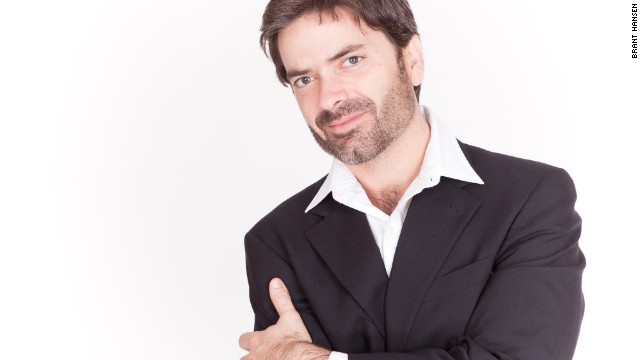
'Mr. Spock goes to church': How one Christian copes with Asperger's syndrome
Brant Hansen, a host on Christian radio, says his Asperger's syndrome once made him feel like an alien at church.
October 19th, 2013
10:28 AM ET
Opinion by Brant Hansen, special to CNN
(CNN) – In the book “Jim and Caspar Go to Church,” an atheist turns to a Christian minister as they're watching a Sunday morning church service and earnestly asks, "Is this what Jesus told you guys to do?"
I've grown up in churches and I'm a Christian, and I'm right there with the atheist.
I honestly don't get the connection. (To be fair, I've grown up on Earth, too, and there are times that I don't understand any part of this place.)
You see, years ago, I was diagnosed with Asperger's syndrome - and like a lot of "Aspies," sometimes I'm convinced that I've landed on the wrong planet.
For those of you who don't know the medical lingo, Asperger's syndrome is an autism spectrum disorder, but not as severe as what most people think of as autism.
It basically comes down to this: those "normal human" rules for things like eye contact, when to smile, personal distance - we just don't get them.
What's more, Aspies like me don't like those rules. They make no sense to us. So usually, we just say stuff - bluntly - and stare uncomfortably at the ground. That's how we roll.
But it gets even trickier for people of faith like me.
Feeling out of place at work is one thing. Feeling like an alien at church is a whole other matter.
Imagine Mr. Spock at an evangelical Christian tent revival, and you’ll get the idea.

And my father is a pastor, so I was in church a lot.
Multiple times, each week, every week, I found myself wishing I'd be moved by the worship music, or that I could shut off my skeptical mind during the sermons.
I'd see people in church services, Christian concerts and Bible camps overcome by emotion and enraptured with charismatic speakers, and I wondered why I didn't feel that way.
Why did I always feel like a cold observer?
After going to college, I was convinced my lack of feeling meant I was missing something, spiritually, so I joined charismatic Christian groups in which emotional manifestations of the Holy Spirit are common.
I desperately wanted to have what they had - an emotional experience of God's presence - and asked them to pray over me.
It didn't work.
When I didn’t move with the Holy Spirit or speak in tongues, they told me it was because I had rejected God.
I worried that it was the other way around: God had rejected me.
Maybe I felt like an alien because I deserved it. I deserved to be alienated, irretrievably and forever far from God.
I tried to pray, read the Bible, and do all the "right stuff." But I still felt out-of-touch.
I wondered if I was so broken, such a misfit that God simply took a look at me and decided to move on.
I wish I’d known then that I was an Aspie. And that God loves Aspies.
I still feel alienated from many parts of Christian culture, but Jesus himself finally reached me.
And man, did I feel that.
To people who are beaten down or befuddled by religious rules, Jesus offers something that no one else does: rest. "Come to me, all you who are weary and burdened, and I will give you rest," he says.
And he sums up the entirety of complex and confusing religious laws with this: “Love God, and love your neighbor.”
Beautiful. Even children can understand that.
The Bible tells a story about a man who approaches Jesus and admits that he has faith, but also strong doubts.
"Help me in my unbelief," he asks Jesus.
Jesus doesn't blast him. He loves him. To me, Jesus is the only one who really makes any sense.
Oddly enough, considering my medical condition, I'm now a radio personality on a network that plays Christian music.
It’s a beautiful fit, in many ways, because I get to talk to many people who also don’t fit in, and wonder if God loves them.
It’s true, though, others won’t understand me. I know that. I’m still an alien in the American Christian subculture.
Each evening I retreat from it, and I go straight to the Gospels.
It's not out of duty that I read about Jesus; it's a respite.
I long for it, because I'm awash in two strange and baffling cultures, both the irreligious and religious.
And I long for someone I can finally understand, and someone who might finally understand me.
Brant Hansen is a radio host on the Air1 network, where his show airs from 3-7 p.m. CT. He also writes a popular blog at air1.com. The views expressed in this column belong to Hansen. 
 - CNN Belief Blog

Filed under:Belief • Bible • Christianity • Church • Faith • Health • Jesus • Opinion • Spirituality

Tuesday, September 23, 2014

My favorite visual to explain my child

So, how many times have you found yourself in that situation where you bump into a friend somewhere and you start small talk. In the process, you coax your child with ASD to greet your friend (someone familiar and safe). The greeting goes as usual (planned/scripted), then it's time for small talk. Your friend asks a simple, typical question and your child responds with something so out of this world (yet very logical to him/her) and you find yourself "translating" between your puzzled friend and your child who desperately wants to connect but has now lost interest. Sound familiar??? Well, here is my all time favorite visual that describes this situation. I absolutely love it and share it with as many folks as I can! I found it on Pinterest and traced it back to the following site: http://thelittleblackduck.com.au/lbd/communication-difficulty-and-autism/

I hope you find it as helpful and useful as I did. Enjoy!
Blessings!
DC


Monday, September 22, 2014

Because it's not about me!

Hello, friendly readers!

After much prayer and thinking, I have decided to turn this blog into a peaceful location for resources to help our kids and families. I will continue to post inspirational things as well, but I've just come to the realization that autism is not about me. As a parent, I need to help my child fit into this world-- not to fully assimilate into it, but to be able to be a part of it. THAT is how I've learned to find peace. As long as I know he is not accepted, understood or acknowledged as a part of people's lives, I will not be at peace. In my journey I have discovered that his peace is my peace. I've learned to find peace on this journey-- you've all learned about that with each of my posts-- now it's time to help my child find his peace and his place. My hope is that with each post you will be able to refill your arsenal of tricks to help your loved ones with ASD. I will continue to post interesting research findings, though I'm over trying to figure out "what?" or "why?" It's time to move on and think about "how?" to make the future accessible and successful for my child.

With each new post, I will make sure to credit the source and offer a link to the original so you can learn more and become better equipped to help your loved ones find their place in this world. So, join me on the rest of this journey as we learn and share together as we move towards helping all of those touched by autism find peace in this puzzling world.

Blessings!
DC

Friday, August 1, 2014

New study out on brain flexibility

Hi folks! It's been a busy, busy summer. Some great new research just came out and I wanted to share. Another piece in the puzzle...
Blessings!
DC


Less Flexibility Seen in Brain Wiring of Kids With Autism: Study

Scans reveal differences that might explain why transitions are difficult
Tuesday, July 29, 2014
HealthDay news image
Related MedlinePlus Page
TUESDAY, July 29, 2014 (HealthDay News) -- When most children take on a task, various brain connections fire up. But scans showed less of this neuro-boosting activity in kids with autism, according to a small new study.
Moreover, children with more severe symptoms of autism displayed even less of this "brain flexibility," the researchers found.
"This reduced flexibility often causes difficulty when children with autism are faced with new situations," said study lead author Lucina Uddin, a neuroscientist and assistant professor of psychology at the University of Miami in Florida. "Knowing how the brain responds differently in these scenarios can help us to make transitions easier for these kids."
The finding -- published July 29 in Cerebral Cortex -- won't immediately lead to improvements in prevention, diagnosis or treatment of autism, which is estimated to affect one in 68 children in the United States. Still, it may provide more insight into the mysterious workings of the brain in autism.
People with autism have trouble interacting with others because they can't interpret many social signals that humans send to one another. They also engage in repetitive behaviors, such as obsessively focusing on one topic, or repeating the same action over and over.
"Based on our recent findings of overconnectivity in the brains of children with autism, I wanted to test the idea that a flexible brain is necessary for flexible behaviors," Uddin said.
In the new study, researchers performed brain scans on 34 children with autism and 34 typically developing children while at rest and while performing a task -- either solving math problems or distinguishing faces from one another. The idea was to include tasks that would -- and wouldn't -- significantly challenge kids with autism.
The kids with autism did as well as the others on the tasks. However, "across a set of brain connections known to be important for switching between different tasks, children with autism showed reduced 'brain flexibility' compared with typically developing peers," Uddin said.
The researchers also found a connection between the severity of restricted and repetitive behaviors and the degree of inflexibility.
In the big picture, "the findings may help researchers develop new therapies that target brain flexibility through strategies, tools and games that improve task-switching, for example," said study co-author Kaustubh Supekar, a science research associate with the department of psychiatry and behavioral sciences at Stanford University School of Medicine.
Jose Perez Velazquez, a senior scientist with Toronto's Hospital for Sick Children, cautioned that just because the brains of people with autism work differently doesn't mean that they work in a worse way. When it comes to behaviors, "which ones we want to label pathological or deviant is, many times, a matter of taste," said Velazquez, who wasn't involved in the study.
SOURCES: Lucina Uddin, Ph.D., assistant professor, psychology, University of Miami, Florida; Kaustubh Supekar, Ph.D., research associate and scientist, department of psychiatry and behavioral sciences, Stanford University School of Medicine, Palo Alto, Calif.; Jose Perez Velazquez, Ph.D., senior scientist, neurosciences and mental health, Hospital for Sick Children, and professor, department of pediatrics and the Institute of Medical Science, University of Toronto, Canada. July 29, 2014, online, Cerebral Cortex
HealthDay